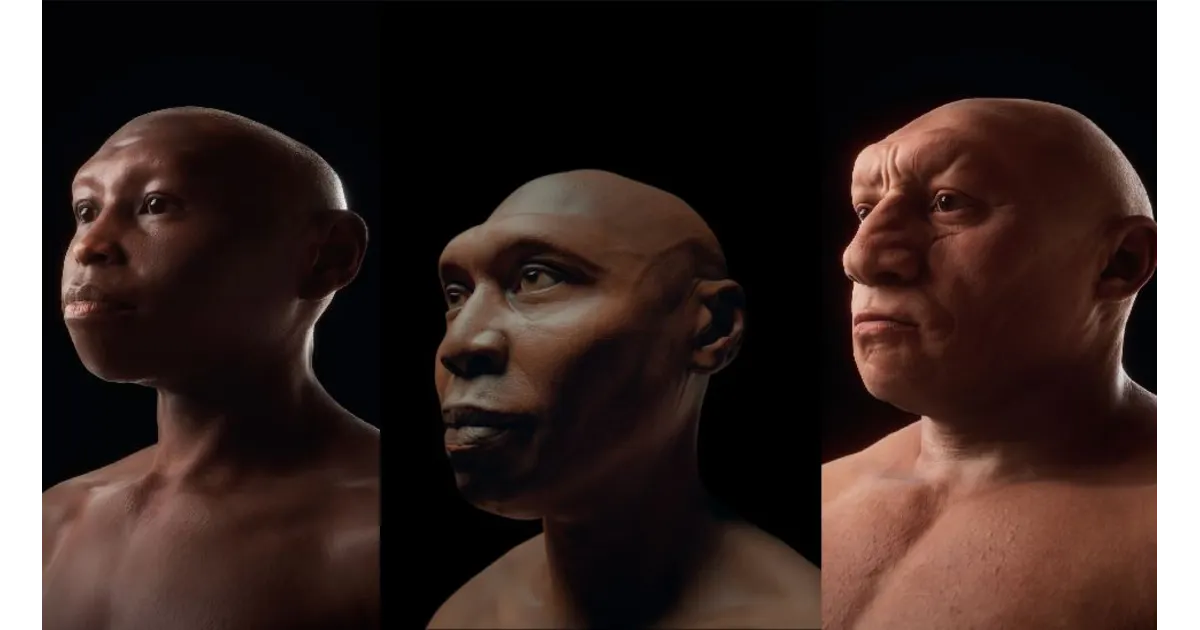
Every human face tells a story, written long before birth through a delicate orchestration of genes turning on and off at precisely the right moments. Recent research suggests that part of this story stretches back tens of thousands of years, revealing how small DNA differences in Neanderthals may have shaped their robust jaws—and, in turn, offering insight into how subtle genetic tweaks influence human facial structure today.
Unlocking the Secrets of Regulatory DNA
Genes vs. Regulators: More Than Just Instructions
Most people think of genes simply as blueprints for making proteins. While this is true, much of our DNA doesn’t code for proteins at all. Instead, these non-coding regions act like directors, instructing genes when and where to activate. Scientists at the University of Edinburgh focused on one such regulatory region that controls SOX9, a key gene involved in cartilage formation, including the jaw and facial structures.
A Regulatory Hotspot With a Big Impact
Large changes in this regulatory region can lead to conditions such as Pierre Robin sequence, marked by a small lower jaw and cleft palate. This suggested that even minor alterations in the same region could subtly shift jaw growth. Comparing Neanderthal and modern human genomes, researchers discovered just three single-letter differences in an enhancer region of roughly 3,000 letters. Though tiny, these differences occur in a powerful hotspot that influences SOX9 activity.
Testing Ancient DNA in Living Models
Zebrafish: Small Fish, Big Insights
To see whether these three Neanderthal variants affected enhancer activity, scientists turned to zebrafish embryos. Transparent and genetically accessible, zebrafish share fundamental craniofacial development pathways with humans, making them ideal for studying genetic enhancers in action.
Visualizing Genetic Activity
Researchers inserted both Neanderthal and modern human enhancer sequences into zebrafish DNA. Using a dual-reporter system, they tracked the activity of each enhancer with green and red fluorescence. Both enhancers activated in the same facial regions, including the frontonasal process and first pharyngeal arch, where the lower jaw forms—but the Neanderthal enhancer glowed more intensely, signaling stronger activity.
Linking Enhancers to Jaw Cells
Single-cell RNA sequencing identified neural crest-derived cells marked by the enhancer, which contribute to jaw cartilage formation. Nearly all these cells expressed SOX9a, the zebrafish equivalent of SOX9, demonstrating a strong connection between the enhancer and cartilage precursors.
From Stronger Signals to Bigger Jaws
How Tiny Boosts Make a Difference
If the Neanderthal enhancer increases SOX9 activity during a brief developmental window, even small boosts can significantly affect jaw cartilage growth. Experiments confirmed this: zebrafish embryos with elevated SOX9 developed larger precartilaginous jaw structures, illustrating how minor changes can have meaningful biological consequences.
Why Neanderthal Enhancers Are More Powerful
Computational analysis suggested that two of the three Neanderthal changes create or improve binding sites for transcription factors like TEAD, JUN, XBP1, CREB3L2, and even SOX9 itself. Another change introduced a CpG site, likely influencing DNA methylation. Prior studies show Neanderthal DNA was less methylated in this region, consistent with the observed higher enhancer activity.
Implications for Human and Neanderthal Faces
These findings show how three tiny changes in non-coding DNA can amplify enhancer activity during critical developmental windows, potentially contributing to the broader, more robust Neanderthal jaw. While this doesn’t explain all aspects of Neanderthal facial structure—many genes and enhancers are involved—it illustrates how small regulatory changes can shape anatomy over generations.
Future Directions in Craniofacial Research
Senior author Hannah Long emphasizes that this approach could help explain genetic variations in craniofacial conditions today. By studying ancient DNA, researchers are uncovering how even the smallest genetic decisions influence the faces of humans past and present, offering insights with potential clinical applications.
Related posts:
Afghan Cricketers Killed in Cross-Border Airstrike
AP TET Hall Ticket 2024 released at aptet.apcfss.in, download link here
Big action by Punjab police, smuggler arrested with consignment of drugs near Indo-Pak border
Bradmanesque Kamindu Mendis scales new peak as Sri Lanka dominate NZ in second Test
Kolkata Under Water Amid Record Rainfall
171 year old wine found submerged in the sea
About the Author