When the Tata Harrier debuted in 2019, offering only a diesel engine was not a significant drawback. At the time, diesel SUVs dominated the segment. However, the market has evolved rapidly. Growing concerns around diesel engines, combined with increasing demand for refinement and performance, have made petrol powertrains far more relevant today. Buyers are now willing to accept higher fuel costs in exchange for smoother, quieter driving experiences.
Tata Motors acknowledges this shift. According to the brand, nearly 30 percent of sales in the premium SUV segment now come from petrol-powered models. To tap into this growing demand, Tata has introduced the Harrier Petrol, powered by the new 1.5-litre Hyperion turbo-petrol engine. Having already made its debut in the Sierra, this engine now faces the challenge of moving a larger, heavier SUV. We drove it around Delhi to see how well it performs.
Exterior Design and Engineering
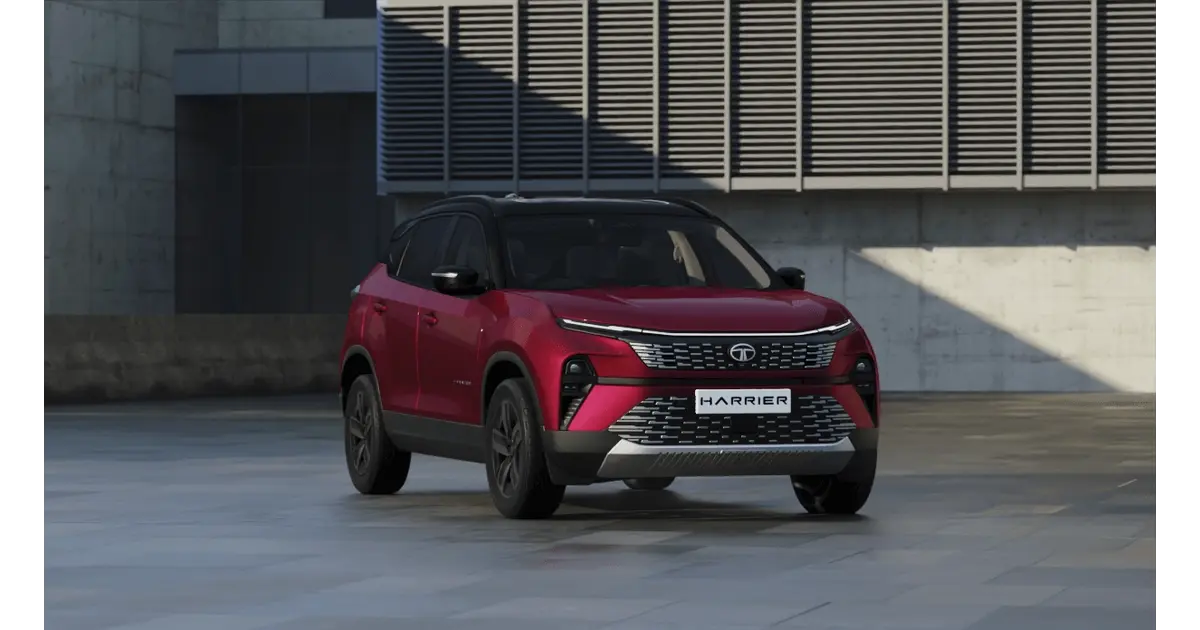
Visually, the petrol-powered Harrier is identical to its diesel sibling. Apart from the exclusive Crimson Nitro paint shade, there are no badges or design cues that differentiate the petrol variant. That said, the 2023 facelift has aged well, and the Harrier continues to look modern and imposing.
The front end features a wide grille with tasteful detailing and a slim connected LED light bar that avoids looking oversized. Alloy wheel options remain unchanged, with the Fearless Ultra variant riding on 18-inch black alloys, while the top-spec Fearless Ultra Red Black gets larger 19-inch wheels. At the rear, the full-width LED tail-lamps and Harrier badging keep the design sharp and familiar. While the styling remains attractive, a few subtle petrol-specific touches would have helped it stand apart from the diesel and EV versions.
Interior Space and Comfort
Inside, the Harrier Petrol adopts a lighter cabin theme compared to the diesel. The dashboard and door panels combine dark brown finishes with Oyster white upholstery, complemented by faux wood accents, silver pinstriping, and piano black surfaces. The overall effect is premium and airy.
However, the familiar ergonomic quirks remain. The wireless charger is awkwardly placed behind the rotary terrain selector, making it difficult to access. The 10.25-inch digital driver’s display is set deep into the dashboard, which makes smaller fonts harder to read. Touch-based controls for climate and essential functions like hazard lights are also fiddly to operate while driving. Additionally, the driver’s knee tends to brush against the centre console over rough roads.
Comfort, however, is a strong point. The driver enjoys a commanding seating position with a wide, supportive seat, though taller occupants may find the seat base slightly short. Rear-seat comfort is excellent, offering generous legroom and shoulder space. The outer rear passengers benefit from winged headrests, though the absence of a headrest for the middle passenger remains a drawback. Boot space stands at a practical 445 litres.
Features and Safety Equipment
The Harrier Petrol gains several features borrowed from the Harrier EV, most notably the large 14.53-inch Samsung Neo QLED infotainment touchscreen. It offers crisp visuals, smooth responsiveness, and access to built-in apps, including video streaming when parked. The experience is further enhanced by a 10-speaker JBL sound system with Dolby Atmos, delivering impressive audio quality.
Another highlight is the digital rear-view mirror, which uses a roof-mounted camera and also doubles as a dash cam alongside the front camera. While useful, it requires careful adjustment to reduce glare, which can slightly affect the dash cam’s field of view. A 360-degree camera system is also included, though image resolution could be better. Practical additions like front and rear camera washers will prove especially helpful during the monsoon season.
Higher variants offer ventilated front seats, a powered driver’s seat with memory that also stores ORVM positions, a panoramic sunroof, ambient lighting, rear sun blinds, a cooled centre console, and voice assistance. Safety is equally comprehensive, with six airbags standard, escalating to seven airbags and Level 2 ADAS on higher trims. The ADAS system performs smoothly, and the Harrier Petrol proudly carries a 5-star Bharat NCAP safety rating.
Performance and Refinement
Powering the Harrier Petrol is Tata’s 1.5-litre Hyperion turbo-petrol engine, tuned specifically for this SUV. It produces 170hp and 280Nm of torque, making it more powerful than its Sierra counterpart. Importantly, the engine delivers strong low-end torque, with 160Nm available from just 1,000rpm.
Despite scepticism about its displacement, the engine performs confidently. Power delivery is linear, turbo lag is minimal, and the Harrier accelerates effortlessly. While it doesn’t chase high revs or deliver a dramatic top-end surge, real-world performance is more than adequate. The engine pairs well with both the 6-speed manual and the Aisin-sourced 6-speed automatic, the latter being the better choice thanks to smooth shifts and well-matched ratios.
Refinement levels are good, with minimal vibrations, though the engine is more audible than expected for a petrol unit from around 1,500rpm. Braking performance is reassuring, supported by disc brakes on all four wheels.
Fuel Efficiency Expectations
Tata has not yet released official fuel efficiency figures for the Harrier Petrol. The brand claims best-in-class efficiency and has even recorded an India Book of Records-certified figure of 25.9kpl under controlled conditions. However, such numbers are unlikely to reflect real-world usage. During our brief drive, the trip computer consistently showed an average of 8.0kpl. A full road test will be needed to establish realistic efficiency figures.
Ride Comfort and Handling
Ride quality remains one of the Harrier’s strongest attributes. The petrol version retains the solid, planted feel associated with Tata’s Land Rover-derived platform. While there is a hint of firmness over broken roads at low speeds, comfort levels remain high. On highways, the Harrier truly shines, offering excellent stability and composure even at high speeds.
The petrol variant is approximately 80kg lighter than the diesel, which should enhance agility. Body roll is well controlled, grip levels are strong thanks to the wide tyres, and the electric steering is well calibrated, feeling light in the city and reassuringly weighted on the highway.
Price and Final Verdict
At the time of writing, Tata has not officially announced prices for the Harrier Petrol. The lineup includes eight variants, starting from the Smart trim and extending to the new top-spec Fearless Ultra and Fearless Ultra Red Dark. Pricing is expected to undercut the diesel by around Rs 50,000 to Rs 80,000, with an estimated range of Rs 13 lakh to Rs 24.5 lakh.
Overall, the Tata Harrier Petrol is a well-rounded and convincing addition to the lineup. It retains the SUV’s core strengths—commanding road presence, excellent ride quality, spacious interiors, and a long feature list—while adding a refined and capable petrol engine. Although some ergonomic and software quirks remain, they do little to overshadow the overall experience. For buyers who want a large, premium SUV without committing to diesel ownership, the Harrier Petrol presents a compelling alternative.
Related posts:
New MG Gloster Blackstorm Price Color Specification in India
Mahindra XUV 3XO SUV Car Features Price
Honda Cars India launches New City and New City e HEV in India
Mahindra XUV 7XO Facelift: Launch, Specs, and Price
Toyota Kirloskar Camry Sprint Edition Features
Nissan Tekton Unveiled: A Bold New SUV for India
About the Author