Introduction: The Boyapati Signature
A Boyapati Sreenu film always begins with a warning. The instant he appears and utters his trademark line, “Babu ready babu, start camera, action,” the audience knows two things: logic has no entry here, and physics is officially on leave. Boyapati announces a universe fueled entirely by exaggeration, grandeur, and unshakable confidence. In Akhanda 2: Thaandavam, that confidence returns stronger than ever, with Balakrishna embodying the hero, the legend, and the superhero in one colossal avatar.
Plot Overview: Epic Stakes and Heroic Duty
The story revolves around a neighboring nation plotting to destabilize India by targeting its spiritual core, Sanatana Dharma. Their scheme involves a massive biowarfare operation during the Maha Kumbh Mela, plunging the country into chaos. The DRDO takes on the task of developing a vaccine, which surprisingly falls into the hands of Janani, a 16-year-old prodigy with an IQ of 266. While she successfully creates the antidote, she becomes the primary target of the adversaries.
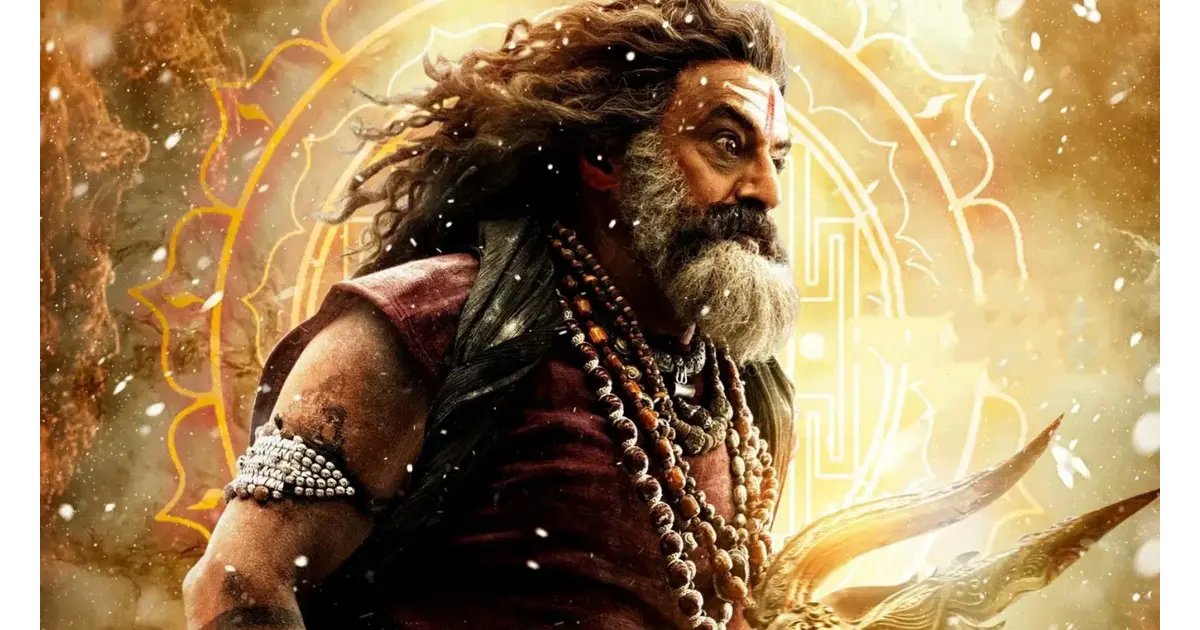
Enter Akhanda, Janani’s uncle, who once vowed to return whenever she needed him. He emerges to safeguard her, halt the biowarfare threat, and restore order. What unfolds is a whirlwind of divine wrath, supernatural action, black-magic twists, geopolitical drama, and Boyapati’s iconic one-man-war sequences where Akhanda battles entire armies armed with only a trishul.
Boyapati’s Signature Style: Dialogue, Drama, and Mass Appeal
Unlike the first film, Akhanda 2 introduces its hero right at the start, creating an immediate impact. What defines a Boyapati film is not just scale, but pitch—every character speaks with larger-than-life energy, delivering lines as if they are monumental declarations. In this sequel, the dialogues are sharper, punchier, and even more theatrical.
The film celebrates Telugu culture in its purest form—temples, festivals, sarees, jewellery, monologues, and heavy reaction shots dominate the visual landscape. There are few comedic moments, but subtle meta references like “seize the booze” provide comic relief amidst the intensity.
Action: No-Logic, High-Octane Spectacle
The action sequences are the core gospel of Boyapati cinema. Akhanda bends guns, stops helicopter blades with a trishul, and launches dozens of enemies with a single punch. Governance, geopolitics, and national security become mere spectators because Akhanda rules this universe.
Some sequences reach the peak of absurdity—gun-wielding adversaries attempt to stab the hero with their own guns, snow chases defy probability, and almost every action block throws ten to twelve inventive, hilarious, and outrageous ideas at the audience. This “no-logic action” has now become a genre in itself.
Dramatic Stakes: Serious Themes, Mythic Logic
While the film dives into themes of faith, Sanatana Dharma, rituals, and national crises, the emotional depth is built on mass-mythic logic rather than narrative subtlety. This makes the drama feel convenient, even when it aims for gravitas. The geopolitical subplot, reminiscent of a Boyapati-fused version of Uri and Avengers, places Akhanda at the center of an otherwise absent army.
Janani’s role, while crucial, is humorously executed as she carries the antidote in a small handbag, and DRDO labs appear more like tuition centers with flashy lighting. The military and national agencies often step aside, leaving divine heroism to solve the day.
Accidental Comedy: Unintended Laughter
Even amidst intense action, the film delivers moments of unintentional comedy. Villains behave like cartoonish generals, and lines like “He died with one punch from an Indian soldier” evoke more laughter than planned comedic beats. These moments, though unintentional, add to the unique charm of the Boyapati universe.
Music and Performances: The Glue That Holds It Together
Thaman’s music is pivotal to the film’s energy. His ritualistic soundscape, percussive beats, and chants elevate otherwise fragile sequences, making the cinematic spectacle immersive.
Balakrishna commands the screen as Akhanda, delivering dialogues and physicality with absolute conviction. Harshaali Malhotra provides sincerity to her character, Samyuktha tries a fresh arc, and Aadhi Pinisetty impresses despite limited screen time.
Technical Aspects: Competent Yet Conventional
Cinematography is solid, editing is adequate, and production values are decent. However, the story remains thin, many characters underutilized, and the plot feels like a stretched continuation of the first film without stronger writing.
Conclusion: Boyapati’s Loud, Divine, Explosive Universe
Despite its flaws, contradictions, and unintentional humor, Akhanda 2 delivers the addictive, larger-than-life Boyapati-Balayya energy. This is not a film that seeks logic; it demands surrender to its extravagance. For audiences expecting loudness, divinity, explosive action, and a man confronting an army with a trishul, Boyapati has delivered exactly as promised.
About the Author