Overview of the PSLV-C62 Mission
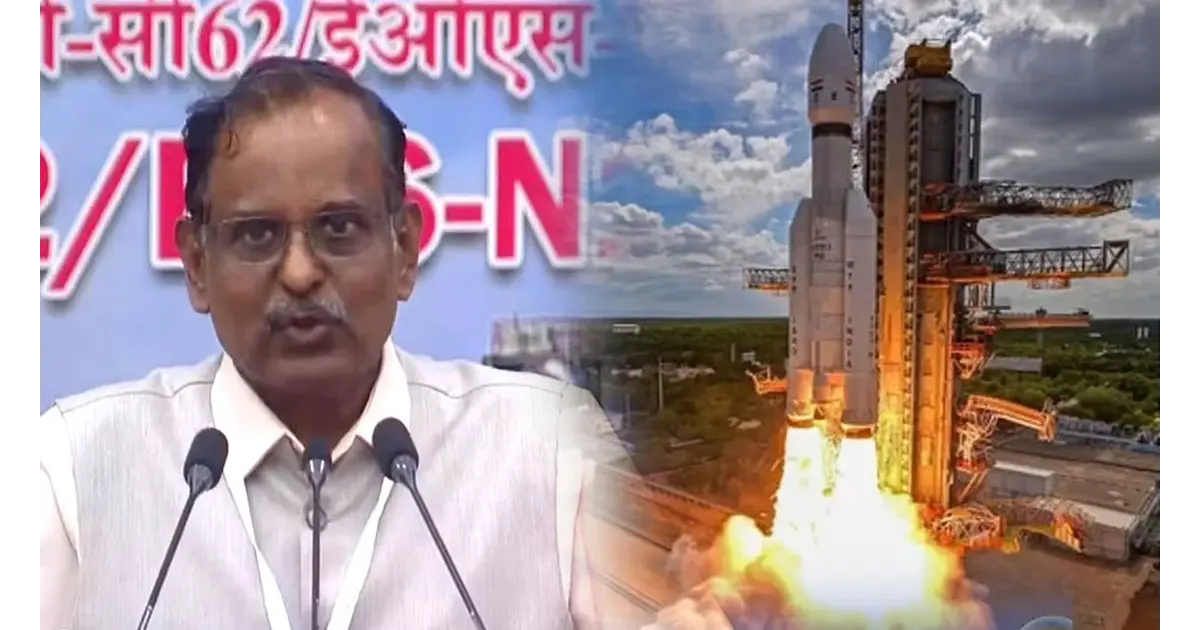
The Indian Space Research Organisation (ISRO) announced on Monday that the PSLV-C62 mission encountered an anomaly near the end of its third stage (PS3). ISRO has initiated a detailed investigation to understand the cause and implications of the disturbance. “The PSLV vehicle performed as expected for most of the flight, but close to the end of the third stage, we observed unusual deviations in its trajectory,” said ISRO chief V. Narayanan.
The PSLV-C62 mission marked ISRO’s first spaceflight of 2026, carrying the EOS-N1 satellite alongside 14 co-passenger satellites and a re-entry capsule on a complex mission profile.
Launch Details
Standing 44.4 meters tall, the Polar Satellite Launch Vehicle (PSLV-C62) lifted off from the First Launch Pad at the Satish Dhawan Space Centre, Sriharikota. The launch was conducted under a commercial contract for NewSpace India Limited (NSIL). This flight represented the 64th PSLV launch and the fifth mission of the PSLV-DL variant, which features two solid stages and two liquid stages.
Mission Objectives and Payloads
Primary Payload – EOS-N1 (Anvesha)
The main payload, EOS-N1 (Anvesha), is a hyperspectral Earth observation satellite designed for advanced surveillance, environmental monitoring, and strategic applications.
Secondary Payloads
Among the secondary payloads:
- AayulSAT: Developed by Bengaluru-based startup OrbitAID Aerospace, this satellite is India’s first on-orbit refueling demonstrator. Its goal is to test technologies for propellant transfer and satellite servicing in low Earth orbit, which are critical for extending satellite lifetimes and promoting sustainable space operations.
- KID Re-entry Capsule: A European technology demonstrator developed in collaboration with a Spanish startup, designed to validate controlled atmospheric re-entry. The capsule was expected to separate from the PSLV’s fourth stage and splash down in the South Pacific Ocean.
- CubeSats and Small Satellites: A mix of small satellites from Indian startups, universities, and international partners, including Dhruva Space’s CGUSAT, focusing on research and commercial applications such as IoT, communications, and Earth observation.
Technology Demonstrations
The mission carried satellites focused on artificial intelligence in orbit, store-and-forward communication systems, radiation measurement, and agricultural data collection, reflecting ISRO’s continued emphasis on technology demonstration and innovation.
Context: Learning from PSLV-C61
The PSLV-C62 mission follows a thorough review of the PSLV-C61 failure in May 2025, when a third-stage anomaly prevented the EOS-09 Earth observation satellite from reaching orbit. A failure analysis committee was formed, and corrective measures were implemented to ensure a safe return to flight. The C62 mission represents a careful step forward in ISRO’s three-decade-long PSLV program, which has an exceptional track record despite a few rare setbacks.
Looking Ahead
ISRO continues to refine its launch capabilities, leveraging lessons from past anomalies to enhance mission reliability. The PSLV-C62 mission demonstrates the agency’s commitment to innovation, international collaboration, and expanding India’s presence in space technology and commercial satellite services.
About the Author