As 2025 comes to a close, Apple’s product portfolio has become noticeably more streamlined. Over the year, the tech giant quietly retired around 25 devices and accessories, signaling the end of several familiar names while sharpening its focus on a more cohesive ecosystem.
iPhone Changes Mark a Major Transition
Apple’s 2025 adjustments mostly followed its usual upgrade cycle, with older models stepping aside for newer, chip-enhanced versions. However, some iPhone changes stood out, particularly the elimination of long-standing design elements that have lasted nearly a decade.
iPhone SE Retires After Nearly a Decade
The most symbolic change of the year was the discontinuation of the iPhone SE. Apple ended production of the third-generation SE in February, following the release of the iPhone 16e. This move officially closed a chapter that began in 2016.
With the SE retired, Apple no longer offers iPhones featuring a Home button, Touch ID, an LCD screen, sub-6-inch displays, or Lightning ports. This marks a decisive shift toward Face ID, OLED screens, and USB-C. Originally designed as a compact, familiar option, the iPhone SE initially mirrored the iPhone 5s but included updated internals. Later iterations adopted the iPhone 8 design, offering a last refuge for users who preferred smaller phones or fingerprint authentication—a refuge that ended in 2025.
iPhone Plus Models Phased Out
Another notable shift was the gradual disappearance of the iPhone Plus lineup. The iPhone 14 Plus and iPhone 15 Plus were discontinued, and indications suggest the iPhone 16 Plus may be next. Apple appears to be pivoting toward the ultra-thin iPhone Air, which could replace the Plus models entirely, phasing the Plus branding into history.
Seven iPhone Models Retired in 2025
In total, seven iPhone models were discontinued:
- iPhone 16 Pro
- iPhone 16 Pro Max
- iPhone 15
- iPhone 15 Plus
- iPhone 14
- iPhone 14 Plus
- iPhone SE (3rd generation)
The iPhone 16 Pro models made way for the iPhone 17 Pro series, while older standard models were retired to make room for newer generations.
iPad Updates Focused on Performance
Apple’s iPad lineup saw fewer dramatic design changes in 2025. Instead, updates centered on performance, with newer models featuring faster chips. Discontinued devices included:
- iPad Pro with M4 chip
- iPad Air with M2
- 10th-generation iPad
These changes, while largely internal, still contributed to Apple’s ongoing product streamlining.
Apple Watch Lineup Becomes More Concise
The Apple Watch lineup followed a similar pattern. With the launch of Apple Watch Series 11, Watch Ultra 3, and Watch SE 3, several older models quietly exited the market. Discontinued watches include:
- Apple Watch Ultra 2
- Apple Watch Series 10
- Apple Watch SE 2
Notably, none of the new models introduced a new chip, making these updates evolutionary rather than revolutionary.
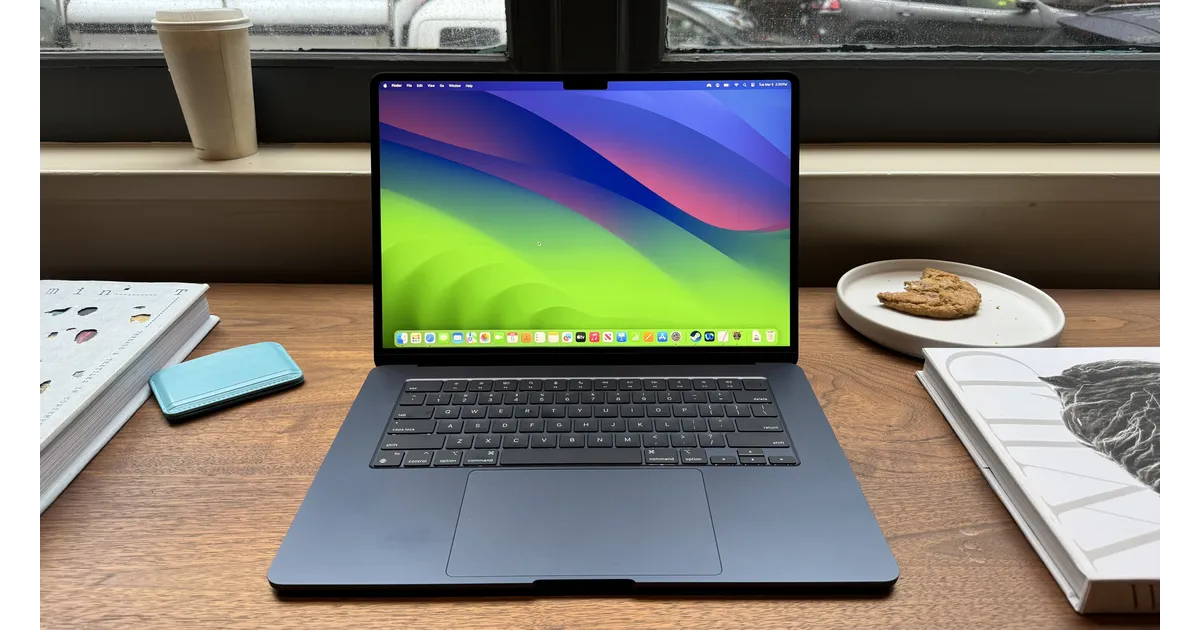
Macs Undergo Major Simplification
Mac users experienced a significant lineup overhaul as Apple phased out older configurations. Models discontinued in 2025 included:
- Mac Studio with M2 Max and M2 Ultra
- 14-inch MacBook Pro with M4
- 13-inch and 15-inch MacBook Air with M3
- 13-inch MacBook Air with M2
This cleanup simplified Apple’s Mac offerings by removing overlapping configurations.
Accessories Updated Alongside USB-C Transition
Apple also refined its accessory lineup. The AirPods Pro 2 were replaced by AirPods Pro 3, and the original Vision Pro with M2 was succeeded by a newer model.
A symbolic shift occurred with the discontinuation of the Lightning to 3.5mm audio cable, underscoring Apple’s complete transition to USB-C. Some accessory updates were rolled out selectively across key markets, including the US, UK, India, Japan, and Canada.
Related posts:
Canon EOS R50 V – Mirrorless Vlogging Camera
Realme GT 8 Pro India Launch: Specs, Price, and Features
Samsung Galaxy Z TriFold: The Next Big Leap in Foldable Smartphones
iPhone Storage: This is the reason why storage problem occurs in iPhone, fix it immediately
Comparison Between Vivo V50 and Vivo V50e
Garmin quatix 8 Pro: The Ultimate Marine Smartwatch
About the Author