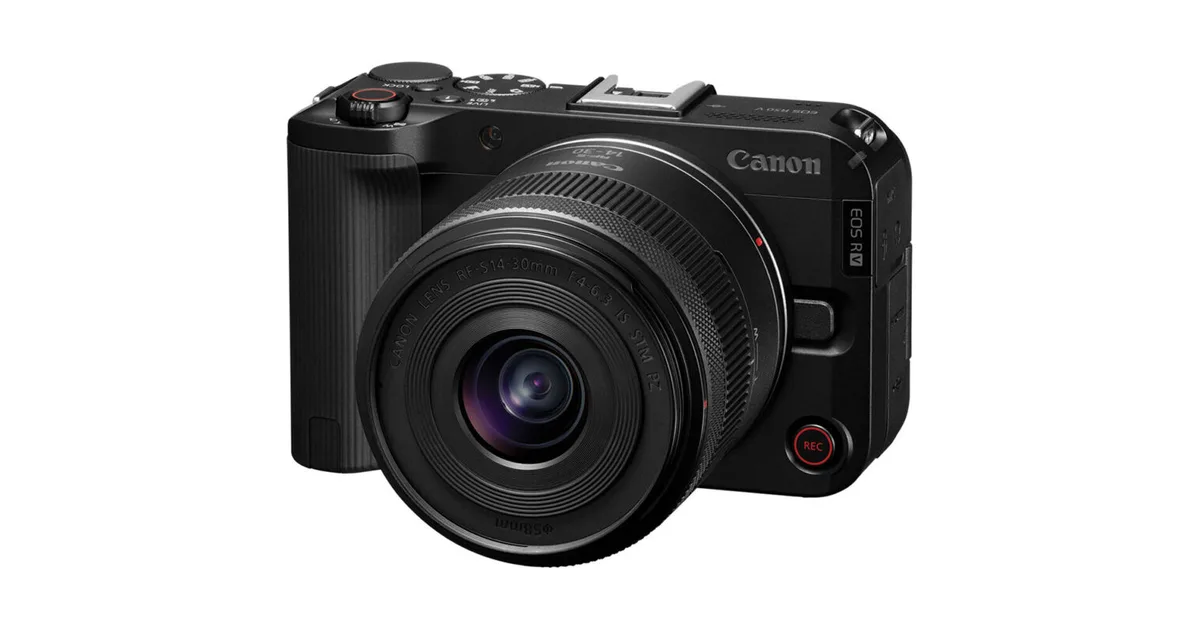
The Canon EOS R50 Mirrorless camera and the newer Canon EOS R50V represent two distinct directions within Canon’s entry-level mirrorless lineup. While they share a common foundation, their design philosophies diverge significantly—one prioritizing still photography, the other engineered with modern video creators in mind.
A Shift Toward Video-First Design
With the introduction of the R50V, Canon has clearly responded to the growing demand for creator-focused tools. Unlike the standard R50, which balances photography and casual video use, the R50V is purpose-built for content production—particularly vlogging, streaming, and short-form video.
One of the most notable upgrades is its video capability. The R50V supports 4K recording at 60 frames per second, albeit with a substantial crop. More importantly, it introduces 10-bit 4:2:2 internal recording with CLog 3, offering significantly greater flexibility in color grading compared to the R50’s 8-bit output. This positions the R50V as a far more capable tool for creators who want professional-looking footage without stepping into higher-end cinema cameras.
Photography vs. Content Creation PrioritiesThe standard R50 retains features that traditional photographers still value. Its built-in electronic viewfinder (EVF) and integrated flash make it more practical for everyday shooting scenarios, particularly outdoors or in controlled lighting environments.
In contrast, the R50V strips away these elements to streamline its body for video use. The absence of an EVF may feel limiting for photographers, but it allows for a more compact and lightweight form factor—ideal for handheld shooting, gimbals, or tripod-mounted setups common in vlogging.
Enhanced Audio and Recording Capabilities
Audio is another area where the R50V clearly pulls ahead. It supports 24-bit, 4-channel audio input, providing greater control for multi-source recording—something especially useful for interviews or collaborative content. Additionally, the inclusion of a headphone jack enables real-time audio monitoring, a feature missing from the R50.
The R50V also extends recording limits up to approximately two hours, removing a major constraint for long-form content creators such as podcasters or educators.
Connectivity and Workflow ImprovementsModern creators often rely on fast file transfers and seamless connectivity, and this is where the R50V introduces meaningful upgrades. It features high-speed USB-C with significantly faster data transfer rates, along with 5GHz Wi-Fi for more stable wireless performance.
By comparison, the R50’s older connectivity options feel more limited, particularly for users who frequently transfer large video files or stream content.
Performance and Buffer Advantages
Although both cameras share similar imaging hardware, the R50V benefits from improved internal performance. Support for UHS-II memory cards allows faster write speeds, which translates to a larger buffer when shooting stills in burst mode. This makes the R50V surprisingly capable even for action photography, despite its video-first positioning.
Which One Should You Choose?
The decision between the two ultimately comes down to your primary use case:
- Choose the R50 if your focus is photography with occasional video. Its EVF and flash provide versatility for a wide range of shooting conditions.
- Opt for the R50V if video is your main priority. Its advanced recording formats, improved audio options, and creator-friendly design make it a far more powerful tool for modern content production.
Canon’s strategy with these two models highlights an important shift in the camera industry. Rather than offering a one-size-fits-all solution, the company has split its entry-level lineup into specialized tools tailored to different audiences.
The R50 remains a reliable hybrid camera for beginners, while the R50V reflects the evolving needs of today’s creators—where video quality, connectivity, and workflow efficiency often matter more than traditional photography features.
About the Author