The Call to the Youth
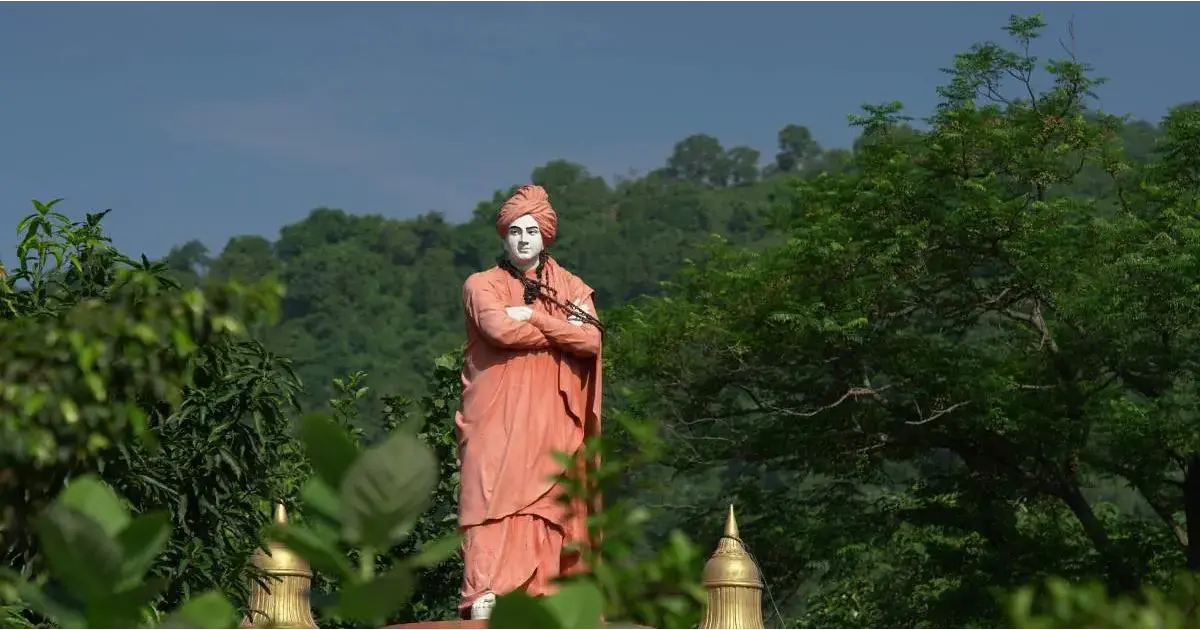
Swami Vivekananda remains one of India’s most inspiring figures, revered as a symbol of self-confidence, courage, and selfless service. His famous exhortation, “Arise, awake, and stop not till the goal is reached,” was more than motivational words—it was a clarion call for a generation to awaken to their potential. Grounded in Vedanta yet directed toward action, his philosophy blended spiritual enlightenment with national renewal, presenting a vision of strength rooted in character, discipline, and compassion.
Youth as the Force of Transformation
Vivekananda viewed youth as the decisive force in shaping society. He believed this period of life should be dedicated not to leisure or indulgence, but to cultivating character and serving others. Physical and mental strength were central to his teaching. His remark that one could get “nearer to heaven through football than through the study of the Gita” emphasized that lofty ideals require a strong body and resolute mind. For him, nation-building meant developing the Head, Heart, Hands, and Health: clear thinking, empathy, action, and vitality.
Faith in Oneself and the True Meaning of Education
Self-belief was a cornerstone of Vivekananda’s philosophy. He warned that weakness—whether mental or moral—was the root of suffering. “Whatever you think, that you will be,” he urged, calling on youth to cast aside fear and self-doubt. In his vision, education was not mere information accumulation; it was a process of drawing out the best within: cultivating character, discipline, empathy, and courage. Spiritual growth, he believed, found its highest expression in service: “Serve God in man.”
Honoring His Legacy: National Youth Day
In recognition of his faith in youth, Swami Vivekananda’s birthday on January 12 is celebrated as National Youth Day in India. His address at the Parliament of Religions in Chicago showcased India’s spiritual depth to the world and instilled confidence among Indians at home. As a monk, he embodied austerity, focus, and selfless dedication—standards meant to inspire action, not merely admiration.
Swami Vivekananda and Kashmir
The Valley’s Spiritual Influence
Among the regions that influenced Vivekananda’s spiritual journey, Kashmir held a unique place. He visited the Valley twice—briefly in 1897 and extensively from June to September 1898. Accompanied by Sister Nivedita and a small group, he immersed himself in Kashmir’s spiritual and historical landscape, calling it the “lamp of civilisation” and “a land fit for yogis.”
Pilgrimages and Spiritual Revelations
During his stay, Vivekananda explored significant sites including Shankaracharya Hill, Hari Parbat, Martand Sun Temple, Avantipora, Bijbehara, and the Mughal gardens of Nishat and Shalimar. Yet the heart of his Kashmir journey lay in his pilgrimages to Shri Amarnath Ji and Mata Kheer Bhawani at Tulmulla.
At Amarnath, he experienced profound spiritual exaltation, feeling the Ice Lingam as Shiva Himself and interpreting the encounter as divine grace. This spiritual epiphany left a lasting impression. In Srinagar, he worshipped the young daughter of a Muslim boatman as Goddess Uma, illustrating his belief in the universality of the divine beyond religious distinctions.
His time at Kheer Bhawani was marked by introspection and devotion. During solitary worship, he reflected on the historical desecration of the shrine, experiencing a transformative revelation: “Do you protect me, or do I protect you?” This deepened his surrender to divine will, dissolving personal ambition and reshaping his understanding of life’s purpose.
A Lasting Affection for Kashmir
Vivekananda’s love for Kashmir endured throughout his life. Writing to Swami Suddhananda in 1897, he called it “one land fit for yogis.” To Sister Nivedita, he admitted that he had never felt sorrow leaving any place except Kashmir, describing it as “this paradise on earth.”
Enduring Legacy
Principles That Transcend Time
The values Vivekananda championed—fearlessness, self-confidence, service, and spiritual universality—remain deeply relevant. Through the Ramakrishna Mission, he offered a practical framework for translating Vedanta into action, guiding generations of youth toward disciplined service and personal growth.
A Universal Message
In Kashmir and beyond, Vivekananda’s life demonstrates that spiritual depth and national purpose are complementary, not contradictory. His call to youth transcends faith, region, and gender, emphasizing clarity, courage, and compassion. Even today, his message continues to inspire generations to rise above fear and realize their highest potential.
About the Author