A Vision of Inclusive Bangladesh
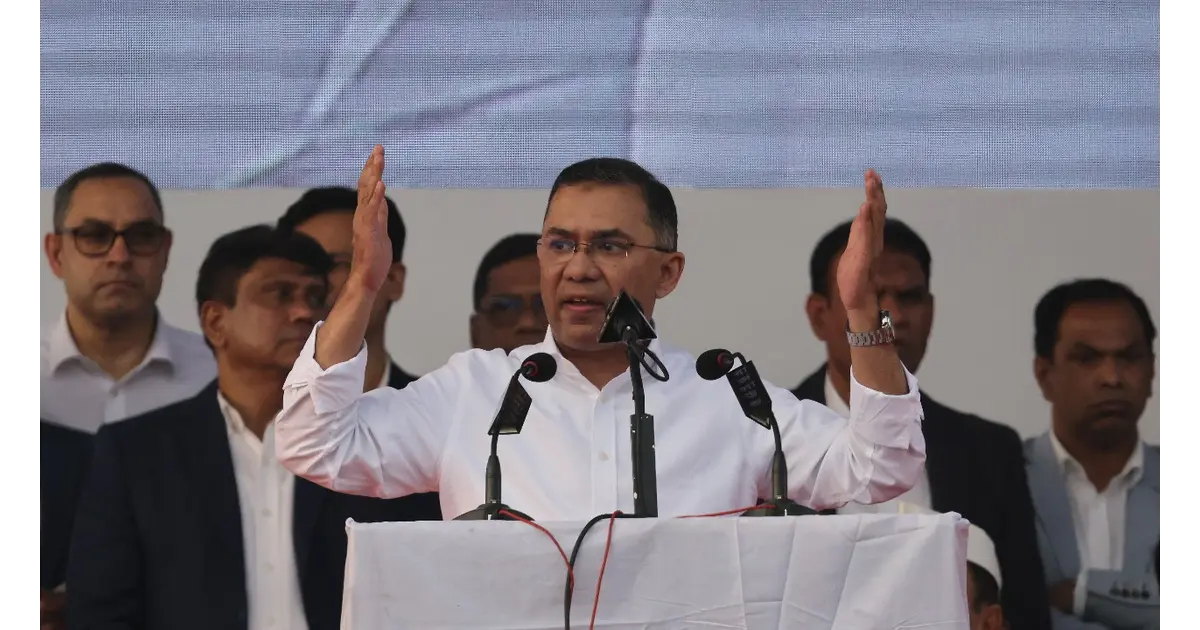
Bangladesh Nationalist Party (BNP) acting chairman Tarique Rahman has urged citizens to embrace peace, unity, and restraint, outlining his vision for an inclusive nation. Speaking for the first time to party supporters after returning from London following a 17-year exile, Rahman emphasized that Bangladesh belongs equally to all its people, regardless of region or faith—including those from the hills and the plains, and followers of Islam, Hinduism, Buddhism, and Christianity.
Grand Welcome Amid Political Tension
Rahman arrived in Dhaka amid heightened political tension and widespread social unease. Thousands of BNP supporters gathered at the July 36 Expressway to welcome him as he arrived directly from the airport. Addressing the crowd, he stressed the importance of rebuilding the nation collectively while ensuring safety and dignity for every citizen.
“The time has come for all of us to build the country together,” Rahman stated. “We want to build a safe Bangladesh, where every woman, man, and child can leave home and return safely.”
Emphasis on Communal Harmony and Security
Rahman’s message highlighted the importance of communal harmony and law and order, aiming to reassure minority communities who have faced attacks in recent months. Since the interim government assumed power following former Prime Minister Sheikh Hasina’s ouster in August last year, violence targeting minority groups, particularly Hindus, has sparked national and international concern.
Notably, protests erupted in Dhaka earlier this week, with minority groups criticizing the government’s failure to protect vulnerable communities. India has also voiced concerns about the safety of minorities in Bangladesh.
Call for Collective Effort
In his address, Rahman called on all citizens to work together to maintain stability:
“Whatever political party we belong to, whatever religion we believe in, whether we are non-partisan individuals—all must join hands to maintain law and order.”
This appeal comes amid rising political rivalry with the hardline Islamist party Jamaat-e-Islami, a former BNP coalition partner, especially after the interim government banned the Awami League. Rahman, 60, the son of former Prime Minister Khaleda Zia, is widely seen as a prominent contender for the country’s top leadership post.
Plans for National Development
Rahman drew inspiration from civil rights leader Martin Luther King Jr., stating:
“I have a plan for the people of my country and for my country.”
He described this plan as focusing on public welfare, national development, and transforming Bangladesh’s prospects. He called for collective support, asserting that achieving these goals requires the participation of all citizens.
Reflecting on Bangladesh’s Historical Struggles
Rahman also reflected on Bangladesh’s history of struggle, highlighting the 1971 Liberation War, the November 7, 1975 Sepoy-People’s Revolution, the 1990 anti-autocracy movement, and the August 5, 2024 mass uprising. He framed these events as symbols of the people’s determination to protect freedom and sovereignty. According to Rahman, Bangladeshis now seek the restoration of democratic rights and freedom of expression.
Personal Note and Family
Closing his address, Rahman requested prayers for his ailing mother, Khaleda Zia, a three-time prime minister currently receiving intensive care at Evercare Hospital in Dhaka, where he later visited her.
About the Author